
Meeting Restrictions (August 2020)

Few people have been as influential in my life as Dr. John MacArthur. For those of you that know me well, you know that he has played a major role in my life. His books, writings, and sermons really set me on the path to spending a lifetime knowing God’s Word. I have dozens of his books on my shelf and it was his presence that led me to the Master’s Seminary, not even considering another possible school. MacArthur has faithfully preached and shepherded his congregation for over 50 years, so when he speaks about church things, I listen.

            Just a few days ago, MacArthur and the elders of Grace Community Church (his church) came to a controversial decision about their church meetings and posted their explanation online for everyone to read. They have decided to defy the governor’s restrictions on church assemblies and guidelines and are going back to meeting as normal. The document in which they explained this was both cordial and respectful, but also clearly contrary to the governor.

            Their argument was based, not on the Constitutional argument (which is a man-made document), instead it was based on the Lordship of Christ over His church. The title of their document was “Christ is the Head of the Church, not Caesar.” That means that they felt the governor had overstepped his bounds of authority in restricting Jesus’ church. In short, Newsome has no power in which to curtail Jesus’ church. And with that being said, they are going back to meeting as normal.

            I wanted to interact a little bit in this month’s article with the reasoning from Grace Community Church and how it applies to us. While I agree with the principle statement that Jesus is the Lord of the Church, I disagree with GCC’s application. Let me explain why.

            First, the governor is not saying the church cannot meet, he is saying the church cannot meet inside. This differentiation is crucial. Grace Community Church has a massive church complex with a huge parking lot and actually has a tent set up in the parking lot where they were holding services for the past number of weeks. Why is this setup not sufficient? Meeting in the parking lot under a tent fulfills both responsibilities: they are gathering together and they are following the governor’s guidelines. It seems like a win-win. If our temperatures didn’t hover around 100 degrees every day I would lobby for meeting in the parking lot.

            Second, the government already restricts ways in which the church assembles, and we rightly go along with those. For example, there are building codes and fire codes we must meet if we are to assemble as a church. Grace Community Church is so large that they have two services because their sanctuary can’t hold everyone in their church. They rightly go along with this instead of cramming people in the aisles and sitting in the exits. Why are these guidelines not an overreach but meeting inside is?

            Third, their document ends with the call for every church reading to ‘join them in obedience to Christ.’ This implies that churches that do not agree are somehow not in obedience to Christ. Now, one of their pastors clarified that this is not what they meant, but it still reads that way. There is no room for a Romans 14 discussion about each person being convinced in his own mind (Rom 14:5). There are good and godly men who feel that not meeting inside is obedience to Christ, since Christ called on us to obey our government (Rom 13, 1 Pet 2, Titus 3). There is no clear Biblical command to meet inside a building. Also, what about those who have health conditions or are high-risk and decide to not come. Are they being disobedient by not gathering?

            Fourthly, they decided to meet without any restrictions. Last Sunday morning, thousands of people met inside of their building sitting next to one another with no masks or no social distancing. That was very surprising to me considering GCC voluntarily went along with the first closure back in March. And, in their document they said that this virus is ‘not as serious as once thought.’ That is a curious statement for church elders to make since they are not medical professionals. Is that an overreach for church leaders to make pronouncements about the seriousness of a virus?

            Look, let me just categorically say that I agree with Dr. MacArthur and Grace Community Church about 99% of the time. I respect his leadership and fearless courage never seeing it paralleled in any other Christian leader. But on this one, I disagree. And that is ok. We can have disagreements about these decisions and still continue to fellowship and minister with one another. It is when we begin to choose sides and separate that this becomes a problem.

            If anyone is upset by the church closures it is me. I do believe we must meet as a congregation. It breaks my heart to not see some of our members for up to five months now. If we could open up tomorrow, I would rush to do it. However, I also believe the Scripture calls on the church to submit to the government, especially when it is for the reasoning of public health. As long as the state is not saying, “you can’t preach” or “you can’t sing” (which we did not abide by), then they are not overreaching their authority. The closure is still temporary and the closure is not unique to the church only. Mosques, synagogues, and other indoor meetings are closed as well.

            So, here is the position we have decided to take at Congregational Bible Church. We will continue to abide by the government’s restrictions, in obedience to Scripture. However, we also know that individuals have health needs that are not just physical. Say, for example, their spiritual health. Officially, we are closed, but we will be live-streaming from our sanctuary at 10:45 with the doors unlocked. We will not bar people from entering the building. If you are concerned about the virus or are high-risk, then watch the live-stream. If you are desperate to be in God’s house on Sunday mornings, we won’t kick you out. We do ask that you follow the guidelines about mask wearing and social distancing.

            Also, we ask that you keep this information ‘in-house.’ Please don’t post this information on social media or announce it to the world. Our desire is to pray for our leaders so that we can “lead a tranquil and quiet life in all godliness and dignity” (1 Tim 2:2).
Don't Let This Divide Us (July 2020)

I’m not sure if I’ve ever seen a time that people were more divided in their viewpoints. Although, I am not talking about politics or elections. I am talking about division in the church of Jesus Christ. And the division comes over Coronavirus and how it should be handled by Christians.

            There are those who believe this is the worst virus we have ever seen. It is a deadly plague and all precautions must be taken. There are those who believe that it is no more problematic than the flu. We should carry on the way life was before the virus hit. These are two completely opposite views, and there are many of those who fall somewhere in between. These differences in views have been heightened now that church has reopened and people’s views are no longer secret because we encounter them wearing a mask or going around shaking hands.

            Now, let me just say that I do not think our church here is letting these differences divide us. But the potential is definitely there for this being a cause of division within the Body. I have written on this before, but it is so important, I must cover it again. We cannot let Coronavirus be the factor that causes the church to splinter into certain groups. Let’s see how the Scripture tells us to handle this non-theological issue.

            First, we are called to serious humility. Let’s all remember we are not infectious disease experts. We do not hold degrees in virology. And this virus is completely new to the world scene. As much as we think our view is the ‘right’ one, I think we can all agree there is much we could be wrong about. That should drive us to being humble and holding our convictions about this with a bit of uncertainty. As Romans 12:3 says, we should not think more highly of ourselves than we ought to. Be humble about how certain you are.

            Second, we are called to serious sacrifice. The Apostle Paul dealt with an issue in the church at Corinth about eating meat. Some in the church thought that eating meat from an idol’s marketplace was sinful. Others saw it as just meat. What did Paul say? “If food causes my brother to stumble, I will never eat meat again” (1 Cor 8:13). He was willing to sacrifice eating meat completely for the sake of his brother or sister. He didn’t want them to stumble in what they thought was right; in terms of things not directly addressed in Scripture. There is a great lesson in there for us: what am I willing to sacrifice for the sake of my brother/sister? Maybe it is the comfort of not wearing a mask, maybe it is not having a shared meal. Whatever it is, the Lord calls us to serious sacrifice.

            Third, we are called to serious preference. That means that the Scripture tells us to do nothing out of selfishness, to put others first, and to not only look out for your interests (Phil 2:3-4). While I may have preferences I would really like to see happen, the Scripture calls on me to put my preferences second to others. The model for this is of course the Lord Jesus Christ, as He would have preferred to stay in heaven, but instead came to earth and died on a cross (Phil 2:5-8). Remember, the way you would like to do things is not the only way to do things.

            Fourth, we are called to serious unity. Jesus’ main prayer for all of those who would believe through the apostle’s words (that’s us) was that they ‘may be one’ (John 17:20-21). That should cause us to take note. What kind of things does Jesus pray for? Well, #1 is unity amongst His people. We cannot forget this. The Lord’s desire is that His people be one.

            Hopefully this virus does not divide us, but the possibility is there. As we look around and see some in masks and others shaking hands, we must call to mind what Scripture has for us. Exercise some serious humility, exercise some serious sacrifice, exercise some serious preference for others, and maintain serious unity. May this be a time when the church is known for how it came together and not how it came apart.

Spiritual Health (June 2020)

Over the past few months we have all had countless concerns about how life is going. We have concerns about our physical health, we have concerns about our extended family’s health, we have concerns about our job and financial situation, and concerns about whether or not the stores will have what we need. As a pastor of a church, all of those concerns are mine also; not just for me personally but for the flock as well. I want our church family to be physically safe, I want our people not to lose their job, and I want us to be taken care of. But if I were to be honest, the biggest concern I have for our church is the spiritual health of the people.

            Now that is a concern regardless of the situation in the world. Of course I am just as concerned for the spiritual health of the people during the non-pandemic times as I am during the pandemic times. But it makes assessing the spiritual health of people much more difficult when I don’t see them for 8-10 weeks. Normally, I get to see most individuals every Sunday, and sometimes Wednesdays as well, and I can catch up with them to see how things are going. In fact, attendance itself can be a partial barometer of the spiritual health of people. If you show up week after week, ready to worship with your Bible that can lead me to believe things are going well in your walk with the Lord. If I don’t see you for weeks on end, or I see you looking saddened or distant, that might be communicating that all is not well in regards to spiritual health. Well, when I don’t see anybody for months then I have no idea of the spiritual health of the people.

            Generally speaking, people fall into 1 of 3 categories when it comes to their spiritual health. First, there are the passionate people. They are on fire for God, excited to learn, and desire to be with other believers. They are happily engaged in the spiritual disciplines of Bible study, prayer, and worship. For these people the pastor must try to keep the flame burning bright. Second, there are the indifferent people. They are not really on fire for God, but they aren’t rejecting either. They are just stuck in neutral. Sometimes church is great, sometimes they casually ignore church. Sometimes they engage in the spiritual disciplines, other times the disciplines are absent for a time. These people need the pastor to splash them with gasoline to get that fire blazing. The third group is what we might call the disobedient people. They are actively living in violation of all the spiritual disciplines. No Bible reading, no prayer, no church attendance, etc. Or, the spiritual disciplines are shoddy at best. These people garner the most concern for the pastor. These people need to get lit up with the pastoral flamethrower.

            Ideally the pastor wants to see all of his people in the passionate group. His work and his prayers center around moving people from category 2 and 3 to category 1. But now we throw in the curveball of a quarantine lockdown that requires people to not gather together around the Word. This causes the pastor to wonder where people are at, and if the passionate have moved backwards to indifferent or even disobedient. Or, have the indifferent regressed back to disobedient.

            The church meetings are not only for worship and learning. They are also a form of accountability. If I’m not there for a while, someone might reach out to me and ask why. That is one of the blessings of a church family: mutual accountability. When you are not allowed to meet, that accountability goes out the window.

            So, what I’d like individuals to do is to consider how this shelter-at-home has affected your spiritual health. Have you remained on fire for God? Are you just as passionate for the Lord as before? Or, have you begun to move towards indifference or disobedience. Thinking to yourself: ‘The live stream is coming on but I’ll go do other stuff.’

            Of course, people can always move the opposite way as well. Maybe the disobedient are moving towards passionate now that church has been taken away. Maybe the indifferent see the need for individual spiritual disciplines because of the increase in free time. Where are you at in your spiritual health?

            I now have a better understanding of what Paul meant when he said in 2 Cor 11:28, “Apart from such external things, there is the daily pressure on me of concern for all the churches.” He had multiple churches to be concerned about. And, he couldn’t regularly see those believers for months at a time. Now that it seems that church meetings are able to continue, hopefully we will be able to continue that good work of seeing people become passionate about the Lord.

Handling the Quarantine (May 2020)

As our stay-at-home orders continue into the 6th week now, we have all become experts at this quarantine, right? It has never been done before in our lifetime, but by now we are all seasoned veterans. Of course I’m joking because we are all still trying to figure all this out day by day. I’d like to share some thoughts, and hopefully some wisdom, in continuing to handle this quarantine. Here are some do’s and don’ts that I’ve learned from going through a quarantine.


First, the Don’ts

Don’t become a doomsday predictor

            It is very tempting to start reading current events into the Bible and try to work out if this is the beginning of the 2nd coming of Christ. But, the Bible describes some horrendous, worldwide, cataclysmic judgments in the book of Revelation. They are nothing like having your salon closed or not being able to eat at Applebee’s. They are much worse! We need to remember that the coming of the Lord is like a thief in the night (Matt 24:43; 1 Thess 5:2), the Day is near (1 Pet 4:7), He stands at the door (James 5:9). This means we should always be ready for the Lord’s return, not just in times of hardship.

Don’t become an extreme introvert.

            Now I understand those who are introverts. To some extent, I am an introvert. I can quietly sit and read a book for hours…no really I can. But I said in the title to not become an extreme introvert. That means do not cut off contact with everyone you know, including church family. Yes we cannot meet face to face, but that doesn’t mean we cannot talk. Grab a phone, make a call, do a drive-by wave but don’t hide yourself in your living room with no outside contact.

Don’t become impatient and hasty.

            Some of us have pretty much had it with this quarantine. We are ready to burst and just go out and have a big reunion party at someone’s house. Be patient. Over and over again the New Testament tells us to be patient. Patience is part of the Fruit of the Spirit (Gal 5:22), patience is one of the characteristics of love (1 Cor 13:4), we are told to be patient with all men (1 Thess 5:14). And this patience is not simply applied in times of joy and prosperity, but actually in times of adversity as well. Consider 2 Tim 2:24, “be patient when wronged.” Or, 1 Pet 2:20, which talks about patiently enduring hardship even when you are doing right. James 5:20 tells us to consider the Old Testament prophets who were examples of suffering and patience. It is times of trial that we need patience the most.


Now the Do’s

Do redeem the time.

            This is an unprecedented opportunity to draw closer to your spouse, draw closer to your family, or draw closer to the Lord, or all of the above. When this is all over I guarantee some will wish they would have spent their time more wisely when they had it. Don’t let this opportunity pass you by.

Do commit to your spiritual devotions.

            Use this time to improve your relationship to Christ. He has never left us nor forsaken us, so this is a great time to return that commitment. Start the habit of spiritual devotions and it will continue even when this is over. He is worthy of such devotion.

Do love your neighbor.

            Take care of those around you, and that does not mean only in terms of providing resources they need. Love them even when they disagree with you. Some may be overly cautious, be sensitive to that and don’t upset them. Some may be overly confident, don’t criticize them. Cautious people and confident people can both be a blessing to us, so be thankful for both.


            Hopefully, these ideas can be a help to us. Let’s continue to pray that this quarantine gets lifted and next month we can have a ‘normal’ voice article and a ‘normal’ church service!

A Common Resurrection?

One of the most entertaining movies of my teenage years was the film The Matrix. It was a mind bending, visually interesting action movie like I had never seen. There was a lot in that movie that you needed to suspend your disbelief to accept, but one particular detail bothered me. Near the end, the hero (spoiler alert) is killed by the bad guy. Neo, the hero, is plugged into The Matrix and he clearly dies as his heart monitor flatlines and the rest of the good guys look on in disbelief. However, as he is dead laying on a table in the real world, the love interest confesses her love for him and guess what happens? Well, he awakens, comes back to life, and proceeds to defeat the bad guy and save everybody. Now, I can accept a lot of things in a fictional movie, but this did not sit right with me. Love resurrected someone? There was no explanation in the film for how he miraculously came back to life.

            Hollywood has a profound impact on our thinking. Whether we admit it or not, Hollywood movies are pushing an ideology. They are promoting a certain worldview. And we spend hours upon hours each week ingesting these worldviews put out by Hollywood motion pictures. As the years have passed since The Matrix, I have noticed a trend popping up more and more in big Hollywood blockbusters. The trend is for the hero to die and to be resurrected. It is not enough for him to be close to death, he must actually die and return. How common is this you ask? Just going off the top of my head I can think of the following major characters who experienced a resurrection-type experience: E.T., the Crow, Catwoman in Batman Returns, Harry Potter, Jack Sparrow and Captain Barbossa of the Pirates of the Caribbean franchise, Superman in the DC Comics movies, Black Panther the Avenger, Optimus Prime and Megatron of Transformers, Gandalf in the Lord of the Rings, and probably many others I am missing. One resurrection doesn’t seem to be enough in both the Pirates of the Caribbean and the Transformers franchises as they have two.

            Why is this becoming more and more common in big Hollywood stories? I mean, these are not obscure films no one has seen, these are the biggest blockbusters. What is Hollywood trying to tell us? I have a theory. My theory is: to have us think resurrection is common. To make it normal, to make it ordinary, to make it just another story detail. But why would Hollywood seek to do that? Because the single most fantastic reality of Christianity is the resurrection of Christ. Here in April we celebrate the astounding reality that Christ rose from the grave. And not only rose from the grave by some outside power, but that He actually rose Himself from the grave (John 10:18)!

            My theory is proven in the movie Justice League where the heroes are discussing bringing Superman back from the dead. Now, he is clearly dead, they had a funeral and buried his body in a casket in the ground. But as they discuss the positives/negatives of resurrecting him (which is totally possible in their mind), the hero Aquaman says, “I don’t know about this, you lose something when you die.” What?! Yes, you lose everything when you die! It’s over! But, his statement implies a normalcy for resurrection itself, just an abnormal effect on those resurrected. As if he is saying, “Look at all the other resurrected people, they don’t come back the same.” You can also look at the Avengers movies where in the last film the Avengers were able to resurrect literally half of all life in the universe! Talk about resurrection being common, 1 in every 2 people would have experienced it themselves.

            You see, we know Hollywood is not pro-Christian anything, so if Satan can make resurrection commonplace and normal in the minds of people, then when we tell them about the glorious resurrection of Christ, they will think it is no big deal because they have seen it dozens of times!

            Does my theory hold water in the real world? Well, I remember talking to a young man about the gospel. When I told him about the resurrection of Jesus, his response almost caused me to fall out of my chair. He said, “That’s no big deal, people rise from the dead all the time.” I was so shocked to hear that I told him, “You’re right, let’s go down to Shafter cemetery and ask them how many resurrections they have seen this week…this month…this year.” Could it be, seeing the normalcy of resurrection over and over again on the big screen had caused him to be less than impressed that some guy named Jesus rose from the dead? Oh Jesus rose from the dead? You mean just like Harry Potter and Optimus Prime did, big deal.

            We must continue to proclaim and announce the astounding reality that Jesus Christ is risen from the grave. That when the disciples heard He had risen, they would NOT believe it until He appeared to them. And, that when they saw Him they were AFRAID (Matt 28:10). Even when the angel told the women that He was risen, they were trembling, astonished, and fearful (Mark 16:8).

            May this be our perspective on the resurrection. May we continually be blown away by the reality that He is risen. May it even cause us to fear, because we see with unveiled eyes who Jesus Christ really is. That He is very different than Jack Sparrow or Gandalf.

~ Pastor Mark Scialabba

Bad Theology Affects Lives

Theology affects life. Good theology will influence people to correct God pleasing behavior. But, bad theology can seriously damage people’s lives of faith. And there is no clearer example of this than in the tragic story of the sudden death of a 2-year-old girl back in December. Olive Heiligenthal stopped breathing suddenly on December 13th and although paramedics and doctors did everything they could to save her, she ultimately passed. The parents of Olive are members of the wildly popular megachurch Bethel Church in Redding, CA where there is a school of ministry as well.

            One of Bethel Church’s main theological beliefs is that the miraculous gifts of the Bible are still in operation today and still possible through certain individuals with those gifts. Their school of ministry is even called the Bethel School of Supernatural Ministry, which basically implies that individuals can be trained in supernatural feats and abilities. If the miracles of the Bible still happen today, then that means resurrections must happen as well, since they happen on a few occasions (Lazarus and Eutychus for example). Since the family went to this church that teaches this particular theological point, they went to the church leaders asking for prayer and intercession for Olive to be resurrected. The leaders of course have to back up what they say they believe so they began a massive movement of prayer and petitions to #wakeupolive.

            This theological view of miracles is just not good sound theology. It arises from a lack of serious study and investigation of the Scripture. Of course, I believe that our God is unlimited in His power and can do anything He wants, but I have to form my theological positions based on consistent study of Scripture and not ‘what ifs.’ This view of miracles is deficient for numerous reasons.

            First, Bethel Church fails to consider the nature and timing of miracles in the Bible. We find just a few periods of concentrated miracles in the Bible. We see miracles in the time of Moses, the time of the prophets Elijah and Elisha, the time of Jesus, and the time of the book of Acts. All of these periods have something in common: it is a time of new revelation that must be confirmed of being of God. For example, Moses bringing the people out of Egypt had to show the people who God is and give His Law to them. The prophets began a ministry of rebuking the wicked kings for their idolatry and evil behavior. Jesus was proclaiming Himself the Messiah the Son of God and the book of Acts was the proclamation of the gospel of Jesus Christ. So, miracles were commonly grouped together at the time of some new revelation from God that needed to be authenticated as being from God.

            Second, Bethel Church fails to consider that all the miracles done in the book of Acts in the church were performed by the apostles, or those directly empowered by the apostles (Acts 2:43; 6:6-8). Nowhere do you see average church people performing miracles like resurrections. Even Paul says in 2 Cor 12:12 that he performed the signs of a true apostle, which means the miracles of apostles were distinctly different.

            Third, Bethel Church fails to consider the uniqueness of Christ and the transitional nature of the book of Acts. For the average Christian to be able to do the same miracles of Christ lessens His uniqueness as the Messiah Son of God. He’s not as special as He seems if I can do the same things. Also, the book of Acts is transitional in nature, moving the plan of God from the Old Covenant to the New Covenant. This radical change in God’s plan, and the introduction of the church, requires authenticating signs to prove it. But it is not necessarily prescriptive of the church for all time. If that were so, why do miracle workers today not perform the ‘negative’ miracles like smiting people with blindness, like Paul did (Acts 13:9-11). Not everything in Acts is normal for the Christian life or in church ministry.

            There are many other cracks in this theology as well. Paul saw his miracle working coming to an end (2 Tim 4:20) because the revelation of the New Testament was ending; never are Christians told to seek after miracles; miracles are spontaneous in the Bible, they are not planned; and Jesus specifically spoke against the idea of a human resurrection as being more powerful than the Word of God (Luke 16:31).

            So, this view of miracles is deficient, but what is most concerning is how it affects people’s lives. Look at the toll it took on this poor family who lost this young child and probably got their hopes up for a resurrection their church says can happen. Look at the harm done to the faith of all of those who joined in pushing for a resurrection, only to be disappointed in God for not doing it. Look at the critics of Christianity who roll their eyes when, surprise, surprise, people do not rise from the dead. What we have left in the wake of bad theology is disastrous results on people’s lives.

            This is truly a tragic story. But there is some Biblical comfort found in loss that we could accurately tell the family. This young child is in the presence of the Lord (2 Sam 12:23) and never has to experience the sorrows and trials of this fallen world. That is where our hope should be placed. I’m not upset at the family at all, I’m upset at the spiritual leadership of places like Bethel whose faulty theology take people on a crash course of faith. Tell people God does miracles, then they pray for a miracle that borders on the edge of testing God, then the miracle doesn’t happen, and finally, the people’s faith is crushed. That is on the leaders for not accurately handling the Word of Truth (2 Tim 2:15).

            This is the supreme importance correct theology plays in the life of a church and why leaders need to ‘get it right.’ Because without correct theology, people’s faith and lives are at stake.

~ Pastor Mark Scialabba

Hermeneutics of Humility

godsauthority-930x620.jpg

I heard a wise man once say, “I know I have some areas of theology that are wrong, I just don’t know what they are yet.” There is much to dissect in that statement. First, the man obviously holds certain theological convictions. That is good and we should hold firmly to our convictions. But, at the same time, the man is admitting that he is humble enough to change his convictions, assuming a serious study of the Scripture leads him to that conclusion. And just to clarify, he was not referring to the cardinal doctrines of the Christian faith (like the deity of Christ), but the disagreements Christians have about other matters.

            This month I want to press upon you a spirit of humility that we must bring when we engage in Bible study. Many of us have been raised in a certain denomination, or have a certain set of beliefs that have been passed down to us, and that is great! However, just because a belief has been held for a long time, doesn’t make it the right belief. We should have enough humility to approach the Scripture as our authority and let it dictate our theology and our convictions.

            Let me give you an example. There was a man who had held a personal belief about baptism for his whole life. He had been raised and taught one certain position regarding baptism. But, after seriously looking at baptism passages in the Bible, this man changed his belief and went through the process of baptism with the conviction that this was what the Bible truly was teaching. That takes a tremendous amount of humility to buck tradition and let the Bible have its rightful place as the final authority. His new conviction was formed by humble Bible study.

            The Bible is the ultimate authority on all matters of faith and practice and we must let the Bible have the final say in all areas of what we believe. When we do not let the Bible have the authority, then we make ourselves the authority. We say things like, ‘the Bible can’t mean that because that’s not what I believe.’ Or, ‘that theology cannot be right because it conflicts with how I do things.’ When we force the Bible to mean what we want, or ignore the weight of opposing arguments, we display a spirit of pride over the Scripture. Instead, a spirit of humility says, ‘have I been wrong on this? Let me check.’ One theologian said it like this, “men are too hungry to be masters of the Word, rather than be mastered by the Word.”

            Now, I am not pushing for a continuous fluidity in theology; that all of your beliefs change all the time. We should have convictions and those should be firm. But, those convictions should be held with a measure of humility as well, that admits the possibility that we may have been incorrect.

            Now, how do we do this? First, we need to engage the Bible with serious study. A verse here or there will not formulate strong convictions. You need to know your Bible. Second, we should interact with good books about the Bible. Commentators and scholars study Scripture and then write about their findings and give their conclusions. Our consideration, of even viewpoints that are not our own, will either illuminate us to where we have been wrong, or at the least give us firm resolve that what we believed was correct in the first place. It is possible to humbly interact with opposing theological views and see if their arguments hold water.

            I commend to you the noble Bereans of Acts 17. When Paul came preaching Christ, it says they ‘examined everything to see if these things were so’ (Acts 17:11). Instead of just dismissing Paul’s preaching because it was different, they investigated and searched to see whether or not this was the true teaching of the Bible. Their study led them to see their previous view was wrong, they admitted it, and they changed their view. That is the spirit of humility we need to have when we come to study the Bible.

Considering Kanye's Confession

Kanye-West.jpg

This month I wanted to write about an interesting situation that happened last year in Christian news. The rapper named Kanye West made a significant profession of faith in Jesus Christ and has since launched a series of evangelistic musical rallies and even a gospel album. Now, this was such big news in the Christian world, and even the secular world, because of the past history of Kanye West. If you don’t know anything about him, let me explain. He is married into the celebrity family of the Kardashians and he has a bizarre history of outlandish claims and behavior, fitting of a big star. He famously interrupted another artist’s acceptance speech to grab the microphone and say how she shouldn’t have won. He also made claims about his greatness, even calling himself a ‘god’ and referring to himself as ‘Yeezus.’ Now, when someone like this professes faith in Christ and claims to be born again, it tends to make news.

            When I first heard the news, I admit, I was skeptical. I thought it was a PR stunt to sell more records or something. But then I listened to a podcast of the pastor who has been discipling Kanye. He explained how Kanye quietly came to his church a few weeks, arranged a meeting with the pastor, and how that pastor met with him explaining the gospel and answering questions for 3 hours, where Kanye confessed to being born again, and the pastor concurred. Now, this pastor has a very credible reputation as well. He was the student body president at the seminary that I attended and pastors a large church in Santa Clarita with multiple seminary faculty sitting under his preaching. If he believed Kanye had been truly converted, who was I to question it? So, I listened to the album and was pleasantly surprised at the Biblical content.

            When news started to circulate of Kanye’s conversion, the response of mainline Christianity was mixed. Some celebrated thinking such a big star would have a positive effect on many others. But some were, not just skeptical like me, but downright insistent that it could not possibly be true. They just could not believe that such a radical change could have occurred in such a worldly man. What is the appropriate Christian response to such a confession of faith from such an unlikely convert?

            I would say rejoicing is the appropriate response. But, I would also say, rejoicing with a healthy dose of caution. Let me explain. First of all, we have no reason to doubt someone’s dramatic conversion, however unlikely. The Bible is full of radical conversions that happen on the spot. Think of Zaccheus, or the Apostle Paul, or the Garasene demoniac of Mark chapter 5. Are we skeptical of those conversions? No? Then, we shouldn’t doubt the power of God to change someone like Kanye as well.

            But, as much as we must believe someone’s confession of faith, we should have a healthy dose of caution as well. Jesus told parables about false conversions that people would experience. Some would-be ‘conversions’ are based on emotionalism and dramatic experiences, but there should be a waiting for fruit to bear to see that conversion experience was real. Think of the parable of the soils, where 2 of the soils have positive responses to the gospel, but eventually fall away as having not been really wrought of God. There is also the parable of the wheat and the tares and the haunting words of Jesus in Matthew 7 about there being ‘many’ who confess faith but are not really saved.

            So, what do we do about Kanye, and others like him? First, we rejoice in that confession of faith. If a person is verbally acknowledging Jesus Christ as Lord and Savior then we should believe him/her! And I would even baptize a person based on that profession of faith. At the same time, I want to lovingly admonish that person that true believers persevere and remain in the faith bearing fruit for Jesus; they do not fall away. We don’t start with skepticism, God can convert any person at any time, that is the power of the gospel! But we remember that confession alone is not salvation.

            When we think of Kanye specifically, let us pray for him. He is a baby Christian who is already neck deep in the spotlight of the world. We should expect him to act like a baby Christian and we should avoid looking to him as any type of leader or pastor. Just because you are a famous, and become a Christian, does not make you a Christian leader. But also, let’s rejoice at the majestic grace of God that can humble a man from a self-proclaimed god to a self-proclaimed servant of God.

~ Pastor Mark Scialabba

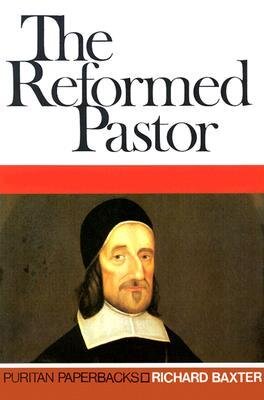
The Reformed Pastor

pastor.jpg

Some books just make a profound impression upon you. I saved The Reformed Pastor for the last month of recommendations because it is my favorite Christian book I have ever read. The reason it is my favorite is for the constant convicting barrage it offers the reader. Look through my copy and you will see underline after underline where I have made a note of a powerful statement or a stinging reprimand. Yes, the book is full of powerful rebukes to lazy and unserious pastors and while I hopefully am not one of those, the rebukes haunt me as I read them. This book constantly reminds me of the serious nature of pastoral ministry and what it means to ‘have charge’ over souls.

            I want to let Mr. Baxter speak and you can see some of what I am talking about. These are some quotes from the book. On the need to faithfully teach each and every person in your church he says, “If there are (spiritually) ignorant people in your parish or congregation, it is a poor discharge of your duty” (pg 42). He calls on preachers to be sure that they are saved before they try to save others, “many a preacher is now in hell, who hath a hundred times called upon his hearers to use the utmost care and diligence to escape it” (pg 53). He says also, “God never saved any man for being a preacher” (pg 54). When confronting unholy ministers Baxter says, “an unsanctified man, who loveth the enemy, is very unfit to be a leader in Christ’s army” (pg 84). In discussing the need for pastors to study well to preach well he says, “Remember they must be awakened or damned, and that a sleepy preacher will hardly awaken drowsy sinners” (pg 148).

            Richard Baxter was a Puritan pastor in a small town called Kidderminster in England in the 1600’s. His ministry transformed the population there from an ignorant, rude and reveling people to a godly, worshiping community because of his personal theological instruction and commitment to each individual.

            If you are a pastor looking for a book that will tell you how great a job you are doing, The Reformed Pastor is not the book for you. If you enjoy rebuke and correction, then you need to read this book. It is good to be shaken out of complacency every now and then. I believe every pastor should read this book every year of his ministry to be reminded of how serious a job it is to be a pastor over God’s flock.

            But maybe you aren’t a pastor and you can’t see a reason to read this particular book. That’s a fair point. But, I would lobby that it is good to be rebuked and corrected frequently, in general. It is a soul-stirring grace for believers to be spiritually beaten up every now and then. Pride and arrogance are the sins with the most subtlety. They creep in and we don’t even know it. So, it is good to read a book or two that jars us out of being content with our spiritual progress and speaks to what is lacking. If you resist any type of personal rebuke or confrontational preaching then you should check your heart for pride because it is probably there. As one long-time pastor said, “hard preaching softens hearts but soft preaching hardens hearts.” It is always good to be reminded of how and where we need to grow and the dangers of what ‘could be’ true of us.

            Richard Baxter’s book is definitely ‘hard preaching’ to pastors everywhere, but it is good in that it will stir men to try and do better. The same can be said for us when we read Christian books. We should look for those titles that will shake us, confront us, and spur us on towards greater spiritual maturity. As Proverbs 12:1 says, “Whoever loves discipline loves knowledge, But he who hates reproof is stupid.”

            I tried this year in the recommendations to select books from different categories. We saw a theology book, a family book, a biography, etc.. Here are some more recommendations that I would give to you all:

            Follow Me by David Platt. A sobering call to what it really means to follow Christ.

            9 Marks of a Healthy Church by Mark Dever. Reads like a textbook for making your church a healthy church.

            The Disciple Making Pastor by Bill Hull. Gives clarity to what is involved in the command to ‘Make Disciples.’

            The Gospel Comes with a House Key by Rosaria Butterfield. A former lesbian who turned to Christ gives an explanation, through personal stories, about what it means to be hospitable.

            Shepherding a Child’s Heart by Tedd Tripp. The best book on parenting that is out there.

When People are Big and God is Small

welch.jpg

I chose this particular book for this month’s article not necessarily for it’s amazing content, but specifically for the topic it covers and the type of book that it is. Let me explain. I want to expose our church to the realm of what is called Biblical Counseling. Simply stated, Biblical Counseling is the use of God’s Word, by the power of the Holy Spirit, to diagnose and provide a solution to desires, thoughts, and behaviors that need to change to become more conformed to God’s will. Basically, it is turning to the Scripture to find answers to most of life’s problems.

            We turn to the Scripture because it alone is completely sufficient to provide us with ‘everything pertaining to life and godliness’ (2 Pet 1:3). The Bible declares about itself that it can ‘pierce us to the division of soul and spirit, joints and marrow and is able to judge the thoughts and intentions of the heart’ (Heb 4:12). No other resource or book can speak with absolute authority like the Bible because it is communicated to us directly from God Almighty (2 Tim 3:16-17).

            The title of the book I am recommending this month is When People are Big and God is Small. The subtitle reads: Overcoming Peer Pressure, Codependency, and the Fear of Man. You see the focus of this book is to look carefully at what the Bible says about things like peer pressure and issues like it and then provide Biblical solutions to that problem. The Bible does not use the phrase ‘peer pressure,’ but that doesn’t mean the Bible doesn’t address this issue. The Bible describes something else called the ‘fear of man’ that is inherently the same problem. The author says that the fear of man is “being afraid of someone, but it extends to holding someone in awe, being controlled or mastered by people, worshipping other people, putting your trust in people, or needing people.” Basically, it is replacing God with people. Instead of holding God in high esteem, we hold people and their opinions of us in high esteem.

            If you were to turn to the world about this problem you would probably hear it called something like peer pressure, or being a people pleaser, or having codependency issues. But the Bible does not see these things as mental illnesses or disorders, but as spiritual issues. With a good understanding of what the Bible says, coupled with the consistent application of the principles the Bible says to put into practice, it can help us overcome these various problems. That is the power and the sufficiency of the Scripture.

            We have to be careful turning to the world for solutions to behavioral and social problems. Now, I’m not talking about physical or biological problems like birth defects or mental disabilities. That is a completely other discussion. I am confident however, that the Bible tells us how to consistently live pleasing to the Lord despite the physical problem. But here I’m referring specifically to what the world would call ‘disorders’ that are not inherently biologically based. Like, for example, things like codependency, worry, addiction, self-esteem, and other similar issues.

            The problem with turning to the world for answers is 3fold. First, the world and its psychologies do not begin with an accurate view of man. They begin with the starting point that man is inherently good and when that person does something wrong, a malfunction must be present. The Bible says man is inherently sinful and so doing bad things is part of his nature. Second, the world promotes the improvement of self above all; that our own well-being is of most importance. The Bible says pleasing God is of most importance, and that our well-being should come second to Him. Third, the world advocates a ‘victim mentality’ which tells us something outside of us happened to us to cause us to be this way. The Bible says it is out of the heart that comes wrongful thoughts and attitudes (Mark 7:21). With this in mind we must turn to Scripture for answers first.

            Now, there is much more that can be said about this issue, but I encourage you check out the Christian books on these types of topics. Do you struggle with something like peer pressure? Then read this book. Do you struggle with fear, worry, and anxiety? There are books on that (Running Scared by Edward T. Welch). Do you have a problem with self-esteem? There are books to help us with that (The Biblical View of Self-Esteem, Self-Love, and Self-Image by Jay Adams). There are books on addictions, helping our children with things like ADHD, and many more. I have little booklets on things like anxiety, loneliness, depression, time management, stress, anger, etc. All of which use the Scripture to address the problem and provide a solution. Why not see how the Scripture can help before turning to the world?

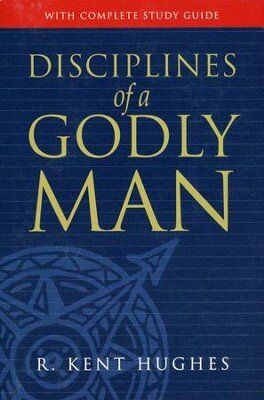
Disciplines of a Godly Man

godlyman.jpg

Just a few weeks ago we had a men’s barbecue here at the church. At that event, we talked about Paul’s short statement in 1 Corinthians 16:13 ‘act like men.’ That statement comes in a rapid-fire list of short commands. The primary idea is to be mature, but we can ask our men specifically, “what does a Biblical man act like?”

            If the church is to advance or progress, there must be a group of godly men leading the charge. That is not an indictment on women, but a recognition of the reality that men are called to lead the church as well as their homes. If the leadership is weak, then the followers will be weak. We see this in sports as a great illustration. Great coaches make average players great. Satan knows that if he can chip away at the foundations of leadership (the men), then he will have a strong impact on the Lord’s church. Just think about it: have you ever heard of a church with a ‘problem’ of too many godly men? No, usually the problem is that we can’t find enough godly men. According to research (The Gospel Coalition) Christian women are routinely more ‘religious’ than men in all kinds of categories. Women read their Bibles more, pray more, and attend church more. These are just facts.

            But we don’t want to slam our men, we want to encourage our men to step up and fulfill the roles that God has ordained for them. That is why this month’s book is geared primarily to men. It is called Disciplines of a Godly Man written by Pastor Kent Hughes. Each chapter selects one spiritual discipline and explains how men can better live in this particular area. There are areas like: Purity, Fatherhood, Prayer, Integrity, Work, Giving, Ministry, and many others. The simple, straightforward listing of disciplines for men is a tremendous help for any man seeking to know what God requires of him.

            This book isn’t just special to me because of the content. It is special to me because it was one of the first Christian books I ever read and really had a significant impact on me determining who I wanted to become as a man. It seemed like every single chapter was my pastor friend Kent Hughes discipling me personally through this book, even though I had never met him. But wouldn’t it be the divine providence of God that Kent Hughes came to the seminary where I was studying and taught a weeklong course on 2 Corinthians during the winterim session. That was my first year in seminary and I knew I was going to attend that class because of the effect Disciplines had on my life.

            Kent Hughes was just as pastorally astute as he was scholarly. He taught all week on the book of 2 Corinthians, mixing in story after story of his decades long experience in pastoral ministry. Some of those profound insights still run through my brain today. Kent Hughes was discipling me for a second time during that winterim class. If you see a book by Kent Hughes, you should get it. I was so excited when I began preaching through the book of James and found a preaching commentary from Kent Hughes on James. It did not disappoint.

            Since the release of this book, his wife has authored one for women called Disciplines of a Godly Woman; they even wrote one together called Disciplines of a Godly Family (which I also highly recommend). I recently saw there is a Disciplines of a Godly Young Man as well. The bottom line is this: the home is where the change in the church will begin. And the change must begin with the men first. Men, let us make godliness our top priority and see what we can accomplish for the Lord.


                                                                                                                                                -Pastor Mark Scialabba

Embed Block
Add an embed URL or code.

I Don't Have Enough Faith to be an Atheist

40985.jpg

There are certain areas of theology that draw my interest more than others. While all theology drives my everyday life, some areas I pursue more. One area of theology that I am speaking of is the area of Apologetics. Now, apologetics sounds like the study of how to give an apology, and that is the literal understanding of the word, but in Greek, an apologia was a defense. It wasn’t about saying “I’m sorry,” it was about being able to rationally and logically defend one’s position using the rules of argumentation. So, the theological area of apologetics is the study of how to defend the faith. Are there rational, logical, coherent proofs for the Christian faith and the Bible or do we just live on blind faith alone? Apologetics is the practice of defending the faith from outside attacks, as well as, offering proofs for why we believe.

            My interest in apologetics began in college. Going to a secular college and coming to faith in Christ there meant that I had to be equipped and prepared to be able to explain what I believe and why. As you can guess, a secular college is not the greatest breeding ground for newfound Christian faith. The anti-God bias is very strong in college and I really had to work through this question: is my faith in Christ and the Bible based on solid evidence and reason, or is it just some fairy tale I chose to believe in? Books on apologetics would reveal to me that evidence for Christ and the Bible are very real and present and our faith is not blind faith at all.

            I remember not being focused with engaging people of other religions, but of people who called themselves atheists. I knew the Bible said, “the fool has said in his heart ‘there is no God’” (Psalm 14:1) but atheists always seemed so sure and confident. They said their views were based on reason, proof, and evidence, and so as a Christian, I felt overwhelmed in trying to debate the existence of God with them.

            But there were serious questions that I wondered how atheists could answer. Questions like: How did something come from nothing (the universe)? How did non-life create life? How does physical matter create something like consciousness? These are questions that I had for atheists that didn’t seem to have any real scientific answer. In fact, the answers they gave all sounded like beliefs! And that is weird because they deride faith, right? The answers were, “we think this happened” or “we assume this happened.” That sounded like faith! They are the ones who reject any type of faith, yet the views they hold require just as much faith as a Christian!

            But I still wondered how to accurately engage the arguments of atheism, but also, be ready to defend what I believe about God and Scripture (1 Pet 3:15). When the title of this book came across my eyes I grabbed it immediately and devoured it with interest. The title of this month’s book recommendation is I Don’t Have Enough Faith to be an Atheist. It seemed like everything I wanted to learn was bound up in that title.

            The book is an apologetic defense of the Bible, God, and the Christian faith but it takes an interesting approach. The first four or five chapters do not mention anything about the Bible or quote Scripture; that comes later. The first few chapters chronicle the various arguments for the existence of God starting from the very beginning of the concept of truth itself, to developing a rational, coherent explanation for the existence of God. The authors use the cosmological argument, the teleological argument, and the moral argument to show that belief in God is the most reasonable truth in the universe. But, along the way, the authors poke holes in the tenets and beliefs of atheism. They continually give the refrain, “I don’t have enough faith to be an atheist” showing that to be an atheist is to actually exercise more blind faith than the Christian! As the book goes on, the proofs continue not just for the existence of a god, but for the God of the Bible and His Son Jesus Christ.

            At the end of the day, we are not trying to win an argument, we are trying to win people to Jesus Christ. So, if you read this book in order to argue with people you’ve missed the point. At the least, this book prepares you to engage and deconstruct the arguments of atheists to show them their beliefs are based on much more faith than a Christian’s. But also, this book can be a real faith booster to the Christian who needs to see evidence and proof to back up what he believes.

The Soul Winner

the soul winner spurgeon.jpg

                I love the books that make me feel conviction. The kind of books that make me think that I should be doing better. The books that point out a specific area of the Christian life that I need to improve upon. I also like to read books by authors from years ago and not just recent authors. Therefore, The Soul Winner by Charles Spurgeon was an obvious choice to be on my favorites list.

                As implied in the title, the book is about being more faithful in evangelism, and that is a topic that I think we all could admit we need to do better. What is strange though, is that while most of us admit we need to do better at evangelism, we don’t read books on evangelism. Maybe something inside of us is scared of that conviction that the book will bring, but conviction is a good thing! Conviction is healthy because it shows us where we need to grow.

                For those reading this who are not familiar with Charles Spurgeon, he was a giant in evangelical Christianity. He pastored the Metropolitan Tabernacle for 38 years in the 1800’s and he was dubbed the ‘Prince of Preachers’ for his amazing sermons. Back then, sermons were transcribed, copied, and then sold. In 1865, Spurgeon’s sermons sold around 25,000 every week. That is a tremendous number! But adding to his preaching ministry was his writing ministry. There is more material written by Charles Spurgeon than any other Christian author…in history! The Soul Winner is primarily written to pastors and church leaders but all can profit from reading.

                The title of the book is based off of Proverbs 11:30 that says, “…and he who is wise wins souls.” It still amazes me that these authors could write a 300+ page book based on one portion of one verse! Spurgeon was a careful theologian and by no means does the title suggest that he will tell us to use some gimmicks or stunts in order to see more people get saved. Spurgeon believed in the sovereignty of God in salvation just as much as anyone else. Just to emphasize this point, Spurgeon tells an illustration of a preacher who led many souls to Christ but upon his judgment day it is told him that he receives no credit for their salvation because the blessing of those salvations came from the “deaf old man sitting on the stairs and praying” (177). That was the source of the rich harvest of souls.

                If you have ever read Spurgeon you know he has a rich way of using the English language. His points are simple, yet his illustrations are vivid and powerful; his admonishment hits straight at the heart. He describes ‘soul-winning’ (evangelism) as our one main business. He says too many preachers are trying to amuse men by entertaining them with lively speaking from the pulpit, to educate men by simply teaching information, and moralizing men by telling them to live rightly. As he says in classic Spurgeon form, “he who wants motion in a corpse should first seek life for it” (253). As he says so powerfully, “of what service will it be to him who has been amused when the trumpet sounds, and heaven and earth are shaking, and the pit opens wide her jaws of fire and swallows up the soul unsaved?” (254). Again, “of what avail even to have moralized a man if still he is on the left hand of the Judge, and if still, ‘Depart, ye cursed,’ shall be his portion?” (254).

                To the reader who thinks to himself, ‘I cannot be a soul winner,’ Spurgeon says, Jesus turned peasants of Galilee into founders of churches. Christ makes average people into soul winners. But, you must have holiness of character, a high spiritual life, and a humble spirit to be used by God in this endeavor. In true Spurgeon fashion he says, “If the Lord has opened your mouth, the devil cannot shut it; but if the devil has opened it, may the Lord shut it up!” (57).

                Circling back all the way to conviction, Spurgeon does not leave us off the hook. He asks very pointedly on page 254, “How many others have you brought to Christ?” A question we must seriously ask ourselves. He continues, “Did you never win a soul for Jesus? You shall have a crown in heaven but no jewels in it. You will go to heaven childless; and you know how it was in the old times, how the women dreaded lest they should be childless. Let it be so with Christian people; let them dread being spiritually childless. We must hear the cries of those whom God has given to be born unto Himself by our means. We must hear them or else cry out in anguish, ‘Give me converts, or I die’” (225). I don’t want a book that tells me I’m doing everything right, I want a book that shows me where I need to grow. Read this book and be challenged in ‘soul winning.’

-Pastor Mark Scialabba

The Disciple-Making Parent

parent child tug of war.jpg

                I distinctly remember bringing home our first child from the hospital. We put her in the car seat, drove her home, and took her inside our small house. Then a terrifying thought came across my mind, “what do I do now?” I understood how she ate and how to change her, but how do I raise and parent this child?

                This month I am recommending the book The Disciple Making Parent as a valuable resource for parents. If you do not have children or your children are already grown, then this book might not be as valuable to you as it might be to others. It would be great to read though to be able to disciple all the young parents we have in our church. If you are a parent of children, especially young children, you need to get this book and read it carefully.

                Let me just say, I do believe the Bible is sufficient for all instruction about parenting. The Bible doesn’t get enough credit for all the passages that deal with parenting. Some examples are: Ephesians 6; Colossians 3, Deuteronomy 6, and of course the entire book of Proverbs. But it is helpful to have theologians unpack those verses for us into helpful books that explain to us how to apply them. The Disciple Making Parent is one of those helpful books.

                I love the continued emphasis on the parents in this book. It makes sense because it is our responsibility to raise our children. It is not up to the daycare or any other teachers to teach our children right/wrong. They will teach the ABC’s and 123’s, but it is the parent’s job to instill truth and values to our children. Every chapter is directed to ‘You’ the parent. We are not let off the hook and the seriousness of our calling is evident throughout the pages.

                When it comes to raising children, Christian parents can make 1 of 2 errors. Error #1 would be to assume their children are believers just because the parents are. Nowhere does the Bible say salvation comes because of one’s lineage. It is up to each individual to place his/her own faith in Jesus Christ as personal Lord and Savior. We cannot assume our 5 year old is regenerated, redeemed, and saved because he/she goes to church with us. That little life must be shepherded with the gospel and the facts of the gospel must be clearly and consistently taught in the home. 3 chapters in the book are devoted to evangelizing your children. Yes, we must evangelize our children with the same perspective as we would evangelize a stranger on the street.

                The second error Christian parents make is to think that outward rules and restrictions can change the child’s heart. We try to ‘Christianize’ our children. I cringe when I hear someone say, “I’m raising my kids Christian.” What does that mean? Are we putting in place rules and restrictions that we think will save them? I make them go to church, I make them say they believe in God, and I make them own a Bible, does that make them Christian? If I make them do a whole bunch of ‘Christian’ things will that will define their spiritual state? The danger with that approach is that we end up raising good little Pharisees. They are required to do the ‘god stuff’ but the heart is never changed. They end up being like the older brother in the story of the Prodigal Son, bitter and resentful to the Father that they have served for so long and gotten nothing like the younger son (Luke 15:25-32). Instead, parenting and discipline always must address the heart. Asking ‘why’ questions are always deeper than ‘what’ questions because they reveal what is going on in the heart. The Disciple Making Parent has 4 chapters that help address the heart of our children.

                On top of that, there are other helpful chapters on how to do family devotions, how to help your children enjoy life but not love the world, how to help our children seek God-honoring friendships, and how to teach your children to pray. I have around 20 books about parenting on my shelf but this resource is one at the top of the list. To further assist parents let me recommend some others as well:

                Shepherding a Child’s Heart by Tedd Tripp (One of the best books on parenting ever)

                Give them Grace by Elyse Fitzpatrick & Jessica Thompson (A mother’s perspective

                                about teaching our children what grace is like)

                What the Bible says about Parenting by John MacArthur (explanations about the various

                                verses on raising children)

                Parents, the task is hard, but the Bible is sufficient, and there are resources out there that can greatly assist us in our task at being faithful in parenting. I encourage you to get them, read them, and learn from them.

-Pastor Mark Scialabba

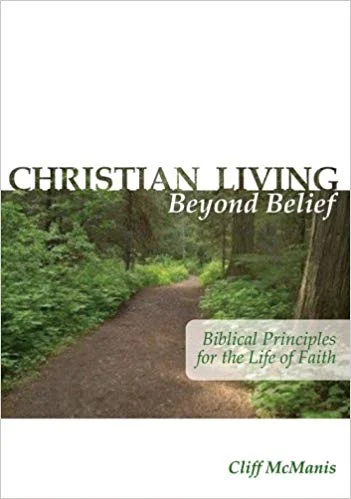
Christian Living Beyond Belief

christian living beyond belief.jpg

It is always my great joy to see individuals come to know Jesus Christ as their Lord and Savior. It is flat out exciting to see people get saved. But once people get saved, now what? We definitely are not done with people once they respond to the gospel. Jesus said to ‘make disciples’ not ‘make decisions.’ We want new believers to grow and we want their faith to mature. We want them to be able to answer this question: what is life like as a Christian? Our book for this month is great for that.

The book is titled Christian Living Beyond Belief by Cliff McManis. Now, it has nothing to do with any type of hyper-spiritual devotional behavior. It is just 11 chapters about the basics of the Christian life. The chapters are on: worship, fellowship, joining a church, serving, discipling, giving, evangelizing, studying, praying, thinking, and obeying. It is an excellent way to summarize the basics of the Christian life. If I had enough copies of these, I would give one to each new believer that we had at the church. The chapters are short and simple and they come with some application questions at the end so this can be used in a small group setting as well.

Over the past few decades, the church growth movement has really had an effect on American Christianity. The positive effect of the church growth movement is that there has been an inspiring effort to see the gospel go forth to every individual. The negative effect of the church growth movement is that the emphasis has been placed on the person’s decision, and not necessarily the person’s continued maturity after the decision. As long as we can get somebody to say ‘yes’ then we are done. That is not the process of church growth and disciple making that the Lord outlined. That is why this book is so helpful. It shows a new Christian what the Biblical process is for personal spiritual growth.

But this book isn’t just for new Christians. This book is for all Christians. The author describes, in the introduction, a consistent problem he saw in the lives of the people he counseled and pastored. The problem he saw was a lack of personal spiritual development. Many believers that he encountered did not have any formal approach to practicing the Biblical principles necessary for spiritual growth. That means that many seasoned Christians did not have a regular habit of prayer, they did not have a regular habit of Bible study, or a regular habit of serving the church. I fear this is probably more widespread in Christianity and not just in his church.

If we are having trouble growing, we must look carefully to our habits and our commitments. We need to evaluate the process of spiritual growth from what the Bible describes, not what we think. This is why this book is a great reminder, a great recall, a great recap of the basics of Christian living. Every once in a while it is good to just take a step back from all the business of life and complications of the Christian life and just remind ourselves about the basics. Service, prayer, reading Scripture, giving, fellowship, etc. Those are the basics and we need to refresh our commitment to those things first. If you find yourself in a spiritual ‘rut,’ maybe this is the book for you. Maybe a call back to the basics is just what your faith needs.

Now, I do have to offer a bit of a disclaimer for this book. At the time of this writing this book is very hard to find. It doesn’t come up on Christianbook.com or Amazon.com. It might be pretty difficult to get hands on. I will keep a lookout for another place where this book can be found but anyone who wants to read it can always borrow mine!

-Pastor Mark Scialabba

The Daring Mission of William Tyndale

the daring mission of william tyndale book.jpg

It’s no secret that I like to read many books. But some people don’t realize that I have a reading plan. I think it is important to be well read over a variety of issues and so when I go to a conference to buy a lot of books, I purposely look to get at least one book in multiple categories. I always want to get a book on Christian living, at least one book on preaching, a book on counseling, and a book on theology, but I also make sure to get a good biography as well. It is tremendously profitable to read good Christian biographies.

Reading a Christian biography reminds us that we are not alone. We stand on the shoulders of those who came before us. Reading good Christian biographies also reminds us that God is still at work, and He has been at work for centuries. He is intimately involved in the building of His church and the lives of His people. Reading good Christian biographies also reminds us that we can always do better. I am consistently humbled when I read these biographies because they show me the great faith and work of other heroes of the faith and that spurs me on towards greater work for the Lord as well.

The book I recommend for this month is a biography of William Tyndale and it is called The Daring Mission of William Tyndale. This book is one in a series of biographies by author Steven J. Lawson. The series is called “A Long Line of Godly Men.” In this series, there are other biographies on big names in Christian history like John Calvin, Martin Luther, and George Whitefield. Lawson has even begun to bring in other authors in the series to borrow their expertise on various figures in Christian history.

I recommend this biography because of its singular focus. The biographies in this series are not an entire history of the person’s life. There are other biographies for that. For example, I have another biography of William Tyndale that is over 400 pages long that chronicles his entire life from birth to death. “A Long Line of Godly Men” is not that kind of biography. They are short and easily readable; usually around 200 pages or so. But they are short on purpose. The biography focuses in on one area of the person’s life and speaks on that. For John Calvin, the focus is on his preaching ministry. For George Whitefield, the focus is on his evangelistic passion. For Martin Luther, the focus is on his boldness. For Tyndale, the focus is on his daring mission.

For those of you who do not know the story, William Tyndale was burned at the stake for the ‘crime’ of translating the Bible into English. Tyndale had grown up in England where spiritual darkness was rampant. The Bibles they had were all in Latin, but the average person couldn’t read Latin; in fact, even some of the priests using their Latin Bible couldn’t! It was a time of empty ceremony, religious ritual, and spiritual superstition. Tyndale sought to change that by translating the Bible into the language of the people: English. William Tyndale was the perfect man to do the translating since he was proficient in eight languages and did his translating directly from the Hebrew Old Testament and Greek New Testament.

To the Catholic Church who held the authority at the time, translating the Bible was a crime. Tyndale was forced to do most of his translating running for his life and he had to smuggle his translated Bibles back into England for the common people to read. This was his daring mission Lawson writes of. He spent the last 12 years of his life on the run as a fugitive until he was captured and killed in 1536. His goal was to get the Word of God into the people of God. He famously said his hope was that “a boy that drives the plow would know more of the Scripture than the pope.”

William Tyndale is one of my heroes because every time I casually pick up my Bible to read it, or casually ignore it when I should be reading it (sadly), I am able to have this Bible in my native language because of men like him. There are many other translators throughout the world seeking to bring the Bible to people groups in their native languages, but Tyndale was the first. The fact that you hold an English Bible in your hand today is due in part to the daring mission of William Tyndale who sacrificed his life to make sure that happened. Ultimately, we are grateful to God for raising up a man like Tyndale, but it is always humbling and encouraging to see how the Lord uses average everyday people to do extraordinary things for His kingdom.

-Pastor Mark Scialabba

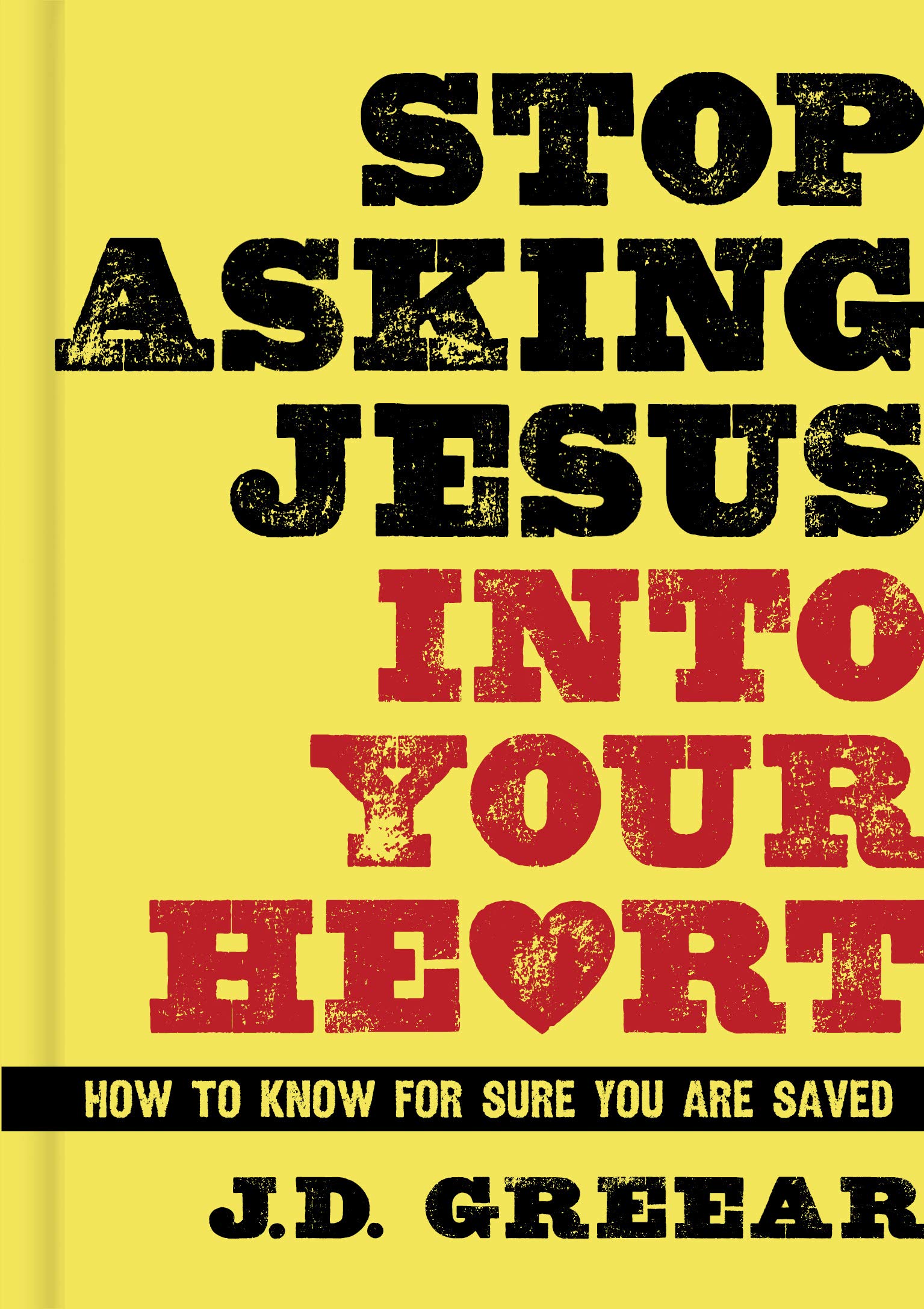
STOP ASKING JESUS INTO YOUR HEART

stop asking Jesus into your heart book.jpg

We all know the old phrase ‘Don’t judge a book by its cover,’ however we have to admit the cover or title of a book plays a large role in whether or not we pick it up and read it. The bright yellow cover and title of this month’s book jumped out at me from the conference table where I saw it. I knew I had to get this book and read it. I had no idea who the author was and I had no idea whether or not the book was any good but the title got me: Stop Asking Jesus into Your Heart.

As a pastor, this phrase has always piqued my interest. ‘Ask Jesus into Your Heart’ seems to be the modern day closer for any evangelistic message. You share the gospel with somebody, they seem interested, you tell them to ask Jesus into their heart. However, that phrase (or anything like it) is not found in the Bible. I guess it seems to be the way to tell an unchurched person “whoever will call upon the name of the Lord will be saved” (Rom 10:13; Joel 2:32).

But what I have seen from people who ‘ask Jesus’ is that they have probably asked Jesus into their heart numerous times and they have done it with increasing earnestness. I remember one man saying, “I’ve accepted Jesus into my heart…and I really meant it.” At the heart of his concern was doubt or question over his salvation. Does our salvation depend on what we asked Jesus? Or, does our salvation depend on how much we really meant it when we asked? Or, does our salvation depend completely on the complete and finished work of Christ? If we depend on our prayer or our sincere intentions then our dependence is misplaced and will cause doubt and confusion.

The subtitle of this book is “How to know for sure you are saved.” This is a book dealing with the doctrine of assurance. While the title of the book is meant to be a bit shocking and funny, the content is serious and Biblical. This is why we buy Christian books in the first place: to be edified and equipped to live the Christian life. We want books to help us with our various struggles and hardships that we are going through. We don’t pick up books just to see how two theologians are arguing with each other; we want edification! And edification happens when an author applies Biblical passages to the specific area and topic that we struggle with.

To say that people struggle with assurance would be an understatement (see the example of the man I referred to earlier). I remember at our church in Long Beach there was an older woman who lived in fear of losing her salvation every day. To say one could know he has salvation was preposterous to her. But the Scripture tells us it is possible to know we have salvation (1 John 5:13).

The author of this book knows how to teach us about assurance because he knows the Bible and he was one who struggled with assurance before. He admits to being baptized 4 times and asking Jesus into his heart hundreds of times. He jokingly admits to walking the aisle in probably every denomination! But the key is the Biblical understanding of faith, repentance, and the sacrifice of Christ. There is a chapter on each of those issues and very clearly and concisely he explains what each of those is and what they mean. There is a chapter on the ‘warning’ passages of Scripture and how they contribute to our assurance of salvation. There is also a chapter on looking for the fruit or evidence of salvation in your life.

This book is simple and small but it is heavy and deep in the content with which it speaks. I believe there might be many people we know who struggle with the idea of assurance. Did I really pray the prayer right? Did I really mean it when I asked Jesus to come into my heart? And for those people we want them to have real assurance, not a false assurance that just says ‘I’m saved because I know I’m saved,’ but a real assurance that is based on them resting completely on the finished work of Christ alone and not on a recited saying. I endorse this book because the author takes a difficult topic and explains it in a way that all can understand. Pick up this book if you struggle with assurance and let’s be equipped in understanding assurance from the Biblical perspective.

-Pastor Mark Scialabba

Gospel According to Jesus

gospel according to Jesus.jpg

I am a firm believer in the doctrine of the perspicuity of Scripture. Perspicuity is simply a fancy word that means ‘clarity.’ Isn’t it ironic that the word theologians chose to say the Bible is ‘clear’ is a really hard word to understand? Anyway, the Bible is clear and understandable in what it teaches. It comes from the infinite mind of God, God delivered the Word in order to be understood, and so that which Scripture teaches is clear.

If that is true, then why are there so many different theological views on teachings in the Bible? Why are there so many theological labels out there that pit men against one another? Just think about all the differing views on the end times! Where does this confusion come from? Well, certainly not from God. He is clear about His views and what He has to say. If there is any confusion, it is on the part of men who confuse the Scripture by not studying it objectively and who have a sinful nature that affects their understanding.

However, I will say that theological disagreement can be a good thing. It obviously helps us define what is the true church as well as orthodox Biblical Christianity. We have to have disagreements so we know how to differentiate between what is true and false. Also, theological disagreement can be a good thing in that it drives us to the Scripture to see what we truly believe and why.

The book I am recommending this month is The Gospel According to Jesus by John MacArthur. This book inadvertently launched an impassioned theological debate about the true nature of salvation. The debate raged through many books and continues today. The discussion is commonly called ‘The Lordship Salvation’ debate. In laymen’s terms, does a person (at salvation) receive Jesus as Savior only, or as Savior and Lord. At the heart of the disagreement is whether or not a person will surely obey Jesus after salvation or not.

MacArthur didn’t set out to ignite a theological fire, he just set out to write a book about what Jesus meant when He said “Follow Me.” The point MacArthur was trying to make was that at salvation, a person comes to Christ as both Savior and Lord. By calling Jesus ‘Lord,’ one is calling Him ‘Master,’ and committing to a life of repentance and obedience.

At the heart of MacArthur’s concern was the thousands of nominal Christians who would say they have been saved, been forgiven, and become a Christian, yet their lives go on totally unchanged. They still live, act, and think the same way they used to before their ‘salvation.’ Is this type of conversion true conversion, or could this be false salvation?

MacArthur, in the book, goes through passage after passage showing how Jesus continually called people to a new life, how He confirmed that true believers bear fruit, and how He warned against the possibility of false salvation. Some examples are: the parable of the soils (Matt 13:3-9) that describe only one true salvation out of four; even though two others ‘looked’ positive toward Christ, the vine and the branches passage (John 15:1-8) that clearly teaches true believers do bear fruit, Jesus’ call to repentance in Luke 13, and the parable of the wheat and the tares that teaches true believers grow right next to false believers.

Over and over again Jesus made it ‘hard’ to become a Christian. He didn’t just accept anyone who made a positive move toward Him. Just think of the rich young ruler, think of Jesus letting some of His followers leave in John 6, and think of His difficult sayings like ‘take up your cross and follow Me’ or ‘the gate is narrow that leads to life and few are those who find it.’ Far from encouraging easy believism, Jesus made sure people really knew what they were signing up for (See Luke 14).

So, as theological debates go, MacArthur was accused of making additions to salvation. His opponents claimed that he was making works a requirement for salvation and he was roundly criticized. But MacArthur affirmed that salvation is by grace alone through faith alone and the evidence of that salvation will be a changed life of fruit bearing. Obedience is not a part of salvation, it is what comes after salvation, and that shows that it is true.

What I appreciate about MacArthur is how he leaves his personal opinions aside and just takes Bible passage after Bible passage to explain what the text says. That is what I appreciate far beyond eloquence of argument and fine rationalizations. Pick up The Gospel According to Jesus (it’s in our library) and see from the Savior’s words Himself what goes is involved in following Jesus. And each one of us should carefully examine our own life. Are we truly following Jesus the way He said to, or are we just saying we are following Him?

-Pastor Mark Scialabba

Pilgrim's Progress

shepherd walking.png

A lot of times our Christian life can seem like a journey or a pilgrimage that is filled with various ups and downs as we make our way through life until the Lord calls us home. The truth is, it feels like that, because it is! The Bible calls us aliens (1 Peter 1:2), pilgrims on a journey just passing through. One of the most common words for our Christian life is a ‘walk.’ This word is used 7 times in the book of Ephesians to describe our behavior on our journey in this life. The Christian ‘walk’ is to be worthy, to be in good works, to be in love, to be not as unbelievers, to be in the light, and to be wise. But our ‘walk’ doesn’t end until the Lord brings us to heaven.

There is a book that vividly describes the Christian life in the image of a journey and this is the book I recommend for this month’s Voice Article. The book is called Pilgrim’s Progress. The book is a full length allegory of the Christian life. In the book, a man named Christian sets out on a journey to the Celestial City. The story begins with Christian living in a town called Destruction. He meets a man named Evangelist who urges him to leave Destruction and head to the Celestial City. Christian tries to get his family to join him on this journey, but they refuse and Christian sets out alone.

Along the way he encounters many other characters. People like Worldly Wiseman who tries to convince Christian to just live a happy life without God. He also encounters Apollyon who hurls darts at him but Christian defeats him with a sword. There are positive characters as well like Goodwill and Faithful. I think one can start to see the parallels in the story with the realities of the Christian life.

There are also locations in the story that Christian must travel through. Places like Vanity Fair is a town that Evangelist warns him about as a place of great temptation. And the allegory gets very complex and very deep when you read the section of Christian, and a new friend Hopeful, who are locked inside of a dungeon in a castle called Doubting Castle. The castle is run by a giant named Despair who holds them captive, but they are able to escape when they remember they hold the key of Promise. The parallel to the Christian life is obvious: when despair holds us in doubt we must remember the promises of God. The knowledge of Scripture that the author John Bunyan has is absolutely remarkable.

The book is actually divided up into two parts, with the second part being the story of Christiana (Christian’s wife) who attempts to lead her children to the Celestial City. The story is of course not a story of salvation by works, teaching us to successfully navigate life in order to earn your way to heaven. But it is an ingenious way to describe the pilgrimage of the Christian in this life.

When you consider how the book was written, as well, it makes the purposes of God even more remarkable. John Bunyan was a believer in Christ, who became a deacon in his church but felt the call of God upon him to preach God’s word. However, in 1660, you had to have a license to preach. Since he was not an authorized speaker for the Church of England he was arrested and put in jail for preaching Christ. He was actually arrested right in the middle of a sermon! But it was in prison that Bunyan would take his pen and write the story of Pilgrim’s Progress. Even though he had a wife and children, he would not leave the prison if the authorities wouldn’t let him preach Christ openly without restrictions. He spent years in and out of prison throughout his life, but it was that time in prison that allowed him to write this famous story. God’s sovereignty and God’s providence is really amazing. This book has gone on to be the greatest selling book in the history of the world, besides the Bible. I encourage you to pick it up, and read it, looking for those wonderful analogies to the Christian life.

-Pastor Mark Scialabba

Knowing God

Man Worshiping From a Mountain Top Christian Stock Photo.jpg

As most of you know, I love books. Reading is a passion of mine and has been for a long time. I usually will read a book or two a week. The vast majority of books that I read are theological or Biblical in nature, but occasionally I will venture into the realm of Fiction and History. While I understand that most people are not like me and do not read as much, I do find it extremely helpful in my walk with the Lord to read good Christian books and I would encourage everyone to read as well. These books constantly convict, refresh, and teach and that is why I can’t get enough of them. Since I do believe reading Christian non-fiction books are very profitable in the life of a Christian, I would like to write on that subject in this year’s Voice articles. Each month I am going to take a book that I have read that has had a profound impact upon me, or that I just think is extremely helpful for our church members to read, and explain what the book is about to inspire others to read it. Basically, this year is going to be about Mark’s Recommended Reading List. This month’s book is the classic: Knowing God by J.I. Packer.

While I attended a Christian church throughout high school, I was not actually converted until I went off to college. I grew up in the San Francisco Bay Area but went off to school to Orange County and Long Beach State. I was out on my own, away from home, but somehow by God’s grace I found a Bible teaching church and it was there that I came to know the Lord. If you haven’t heard, college campuses can be a place that is not very welcoming to born-again Christians. Yes, I had my church family, godly pastors, and even a Christian club that I regularly attended, but the vast majority of my time was spent around unbelievers who encouraged ungodly lifestyles. I knew it was my responsibility to work hard on my spiritual growth and I resolved to settle down and read Christian books during my breaks between classes and other portions of free time.

I can’t even recall how Knowing God entered into my possession. I’m pretty sure I bought it at the local Christian bookstore in Long Beach probably at the suggestion of someone in the church I was attending or because it had a little sticker on it that said it had sold over 1,000,000 copies. That meant it had to be good, right?

The book is exactly what you would expect from the title. It is basically a theological book, written in layman’s terms, to help Christians understand who God is. Each chapter covers a different attribute of God and explains those attributes in ways that help the reader ‘know God.’ There are chapters on God’s love, God’s majesty, God’s wisdom, God’s wrath, etc.

In reality, this is what we are doing when we read or study the Bible. We are trying to learn about God more, to know Him. The Bible was not written as a manual for our life. It contains that, of course, but that is not why it was written. God wrote the Bible to reveal Himself. That’s what the Scripture is. It is a revelation of the Divine, Perfect, Glorious, All-Knowing God. The infinite God has made Himself known to His creatures, and so when we read the Bible, we are discovering more and more what God is like. And because God is infinite, our knowledge of Him is able to grow and grow without ever being exhausted.

Packer does a great job taking these profound theological truths and explaining them in ways any Christian can understand. I remember taking 15-20 minutes between classes and finding a bench somewhere to read a chapter and being amazed at how God can be completely unlike us, but also, command us to be like Him. We can never be unchanging or majestic like God, but we can be loving and wise like God. This is where Knowing God is so helpful. I think over the years I have read through this book numerous times.

I encourage you to get this book and make your ambition in life to know God more and more. There are a lot of things we spend our time trying to know. We try to know about sports, or the stock market, or movie stars. But knowing God should be our ultimate goal. This book will help in that endeavor, but it is not the final stop on that journey. It is merely a help that guides us into knowing Him more and more.

- Pastor Mark Scialabba